The UBC Animal Care Services Training Program offers training of all personnel prior to receiving access to animal facilities, which includes instruction on proper animal handling, animal care, and safety precautions.
UBC provides a comprehensive specialized training programs related to animal care and use, which must be completed before laboratory staff can work with animals.
Reserachers at UBC work with large and small animals and in the vast majority of cases, this involves using mice, rats, and zebrafish. Sometimes, however, it is necessary to use species that are closer to humans in size or development. The principles of Replacement, Reduction and Refinement of animals in research (3Rs) underpin all related work carried out at the University.
Experimental animal user training streams:
Rodents
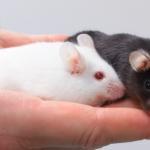
More than five out of ten research animals at UBC are rodents due to their similarities to human physiology, including circulatory, reproductive, digestive, hormonal, and nervous systems.
This training stream is intended for investigators working with rats, mice, guinea pigs, and gerbils.
Pigs
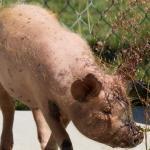
Pigs are an optimal model species for new disease treatments and for clinical validation of medical and surgical devices due to their similarity to humans in size, physiology, and genetics.
This training stream is intended for investigators working with miniature and domestic pig models.
Sheep
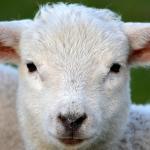
The sheep model offers insights into cardiovascular disorder, orthopaedic examination, reproduction, gene therapy, neurodegenerative research, and emerging therapeutic applications.
This training stream is intended for investigators working with sheep models.
Fish
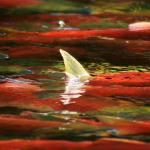
Fish are an excellent animal model for studying development in vertebrates. They are also valuable for genetic analysis or experiments that require a large number of individual animals.
This training stream is intended for investigators working with wild, captive, freshwater, or saltwater species.
Cattle
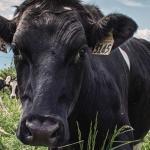
Cattle are important to biomedical research because their reproductive cycle is remarkably similar to humans. Studying dairy cattle also enables better understanding of genetics, biological processes, and gut microbiomes.
This training stream is intended for investigators working with cattle.
Rabbits

Rabbits are an invaluable model in immunological research, including both immunogenetics and the study of infectious disease.
This training stream is intended for investigators working with commercial rabbit sources including inbred, outbred, hybrid, transgenic, and mutant models for study.
Amphibians and Reptiles
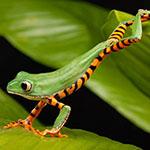
Working wtih reptiles provides an opportunity to learn about development, metabolism, and protein structures and function. Reptiles also serve as a model for studies involving neurology and ophthalmology.
This training stream is intended for investigators working with models such as frogs, geckos, and anoles.
Birds
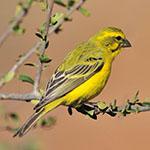
Avian species may serve as excellent model systems to enable the study of physiology, aging, environmental issues as well as study social and physical cognition to better understand human behaviours.
This training stream is intended for investigators working with models such as hummingbirds and zebra finches.
Questions?

UBC Animal Care Services veterinarians have tremendous expertise. We can assist researchers with model development, discovery, and proof-of-concept studies for pre-clinical testing of novel compounds and medical devices in a wide array of species.
Our state-of-the-art facilities provide the capability to further your research.
Supplemental training resources
Animal Care Services veterinarians and technicians are available for training in various technical and experimental procedures. Our skilled technicians can teach routine procedures such as gavage, injections, and blood and tissue sample collection. They also provide training on the use of ACUP facility rodent anesthesia machines. Our veterinarians (on a time-available basis) can train researchers in techniques such as intubation, intravenous injections, and surgical and anesthesia techniques.